
 Email
Email Print
Print

Helmet Safety Starts with a Proper Fit
2015-10-06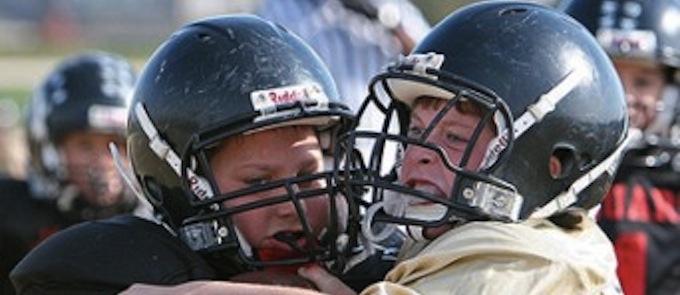
Helmet safety is one of the most crucial elements to playing football, but it is also a difficult part of equipment distribution for many players, coaches and parents.
Thad Ide, Vice President of Research & Development at Riddell, said, "Most components of football helmets and shoulder pads serve a critical protective purpose. A proper fit ensures that all protective elements of your equipment are positioned where the product designers and engineers intended them to be to best protect the athlete."
The most important part to proper helmet fitting is listening to the players being fitted. Be sure to ask how their helmets feel, if they feel tight and if they feel safe throughout the process to make sure they each feel comfortable every step of the way.
When taking head measurements of your athletes, measure around the middle of their foreheads. To put the helmet on, show the players to put their thumbs over the bottom of the face pads, with their fingers in the inside of the helmet. Face pads should first touch the temples when pulling the helmet down over the head.
Once the helmet is on, make sure the helmet touches the middle of the forehead. Never let players participate with helmets that sit too high or too low on the head. Use both hands to push down on the top of the helmet, and double check that the helmet does not move.
The chin strap should be centered under the chin and should fit well so that the player's chin feels secure. These straps are available in many sizes and are adjustable to ensure a good fit for all players. The chin strap's purpose is to help hold the helmet in place. Make sure that the face pads fit firmly against the face. Inflatable face pads are also an option in order to add padding.
Another necessary step in helmet fitting is to check the athlete's vision, both straight-forward and peripheral. The helmet should not inhibit vision and the athlete should be able to see clearly, despite the face mask. This is difficult to determine, especially with younger players. Track visibility with your finger to make sure they can see well enough to be safe.
To take the helmet off properly, show the athletes to first unbuckle the chin strap, and then place an index finger into each ear hole on either side. Show them how to press the face pads with their thumbs. Lift the helmet off straight over the head.
Even if a helmet feels snug, there can still be room for the athlete's head to move, which can lead to injury. Listen to what the player says about the fit of the helmet and try to make sure the helmet is not too tight and is not too loose. It is extremely important to rely on feedback from the athlete in order to find the right fit.
- See more at: http://usafootball.com/health-safety/helmet-safety-starts-proper-fit#sthash.rU506OJj.dpuf